Georgia’s Medical Cannabis Program in 2026: Laws, Dispensaries, and Industry Growth
Author: First Hit Editorial
Category: Georgia Cannabis News
An overview of Georgia’s medical cannabis laws, dispensary expansion, and the economic potential of the state’s emerging cannabis industry.
Introduction
Georgia’s medical cannabis program has entered a new chapter.
For years, the state maintained one of the most restrictive medical marijuana policies in the United States. While other states moved rapidly toward legalization and broader cannabis markets, Georgia chose a slower and more cautious path.
But in recent years, that approach has begun to change.
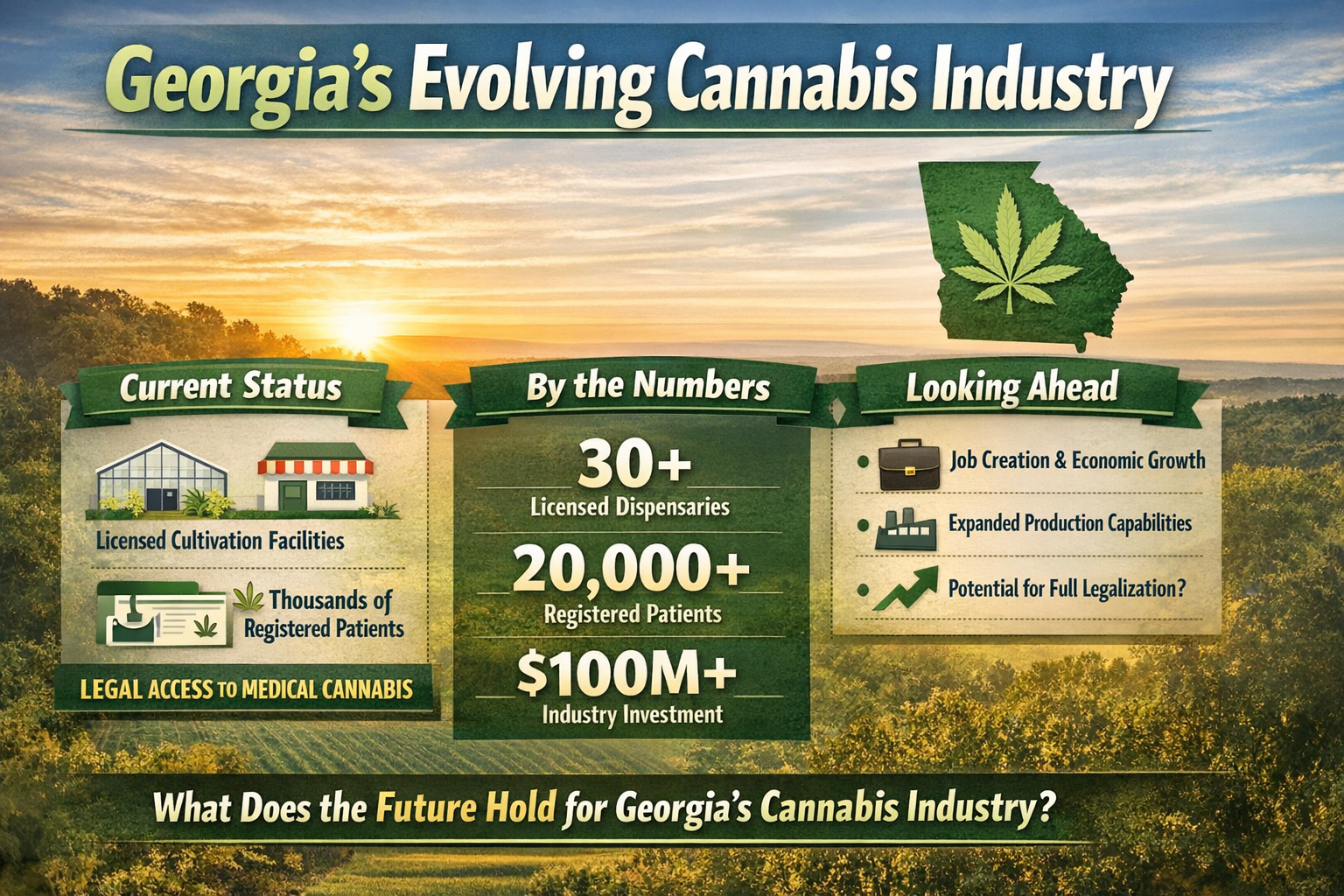
With licensed cultivation facilities operating, dispensaries opening across the state, and thousands of registered patients gaining legal access to treatment, Georgia’s medical cannabis program is steadily evolving.
Today, the industry represents not only an important healthcare option for patients but also the early stages of a developing economic sector that could bring new jobs, investment, and innovation to the state.
So where exactly does medical cannabis stand in Georgia today—and what might the future hold for the state’s growing cannabis industry?
Georgia’s Medical Cannabis Law: A Quick Overview
Georgia’s medical cannabis program centers around low-THC cannabis oil, which was legalized for certain medical conditions under state law.
For years, patients in Georgia were allowed to possess cannabis oil but had no legal way to purchase it within the state. That changed when lawmakers authorized a limited number of companies to cultivate, produce, and distribute medical cannabis products within Georgia.
These licenses created the foundation for Georgia’s first regulated cannabis supply chain.
Today, registered patients can legally obtain medical cannabis oil from licensed dispensaries operating under state oversight.
While Georgia’s program remains more limited than those in many other states, it represents a major step forward from the early days of cannabis policy in the state.
Economic Impact and Industry Potential
Beyond healthcare access, Georgia’s medical cannabis program also carries significant economic implications.
The development of licensed cultivation facilities, manufacturing operations, and dispensaries has already begun generating new jobs and business investment across the state.
Cannabis production requires a wide range of professionals, including:
• agricultural specialists
• laboratory technicians
• manufacturing workers
• retail staff
• compliance and regulatory professionals
As the program expands, these sectors have the potential to contribute to Georgia’s broader economy.
Across the United States, cannabis has become one of the fastest-growing industries, generating billions of dollars in revenue and supporting hundreds of thousands of jobs. While Georgia’s program is still relatively small, its long-term economic potential is significant if lawmakers continue expanding access and regulation.
Who Qualifies for Medical Cannabis in Georgia?
Georgia’s program is designed for patients with specific qualifying medical conditions.
These include:
• severe seizure disorders
• cancer
• Parkinson’s disease
• Crohn’s disease
• PTSD
• intractable pain
• certain terminal illnesses
Patients must obtain a Low-THC Oil Registry Card through a physician authorized by the state.
This card allows patients to legally possess cannabis oil containing up to 5% THC, which can provide therapeutic benefits for individuals managing chronic medical conditions.
Thousands of Georgians have already registered for the program, and that number continues to grow as awareness increases.
The Role of the Georgia Access to Medical Cannabis Commission
Oversight of the program falls to the Georgia Access to Medical Cannabis Commission (GMCC).
The commission is responsible for:
• licensing cannabis cultivation companies
• regulating dispensary operations
• ensuring product safety and compliance
• overseeing the statewide medical cannabis supply chain
Because Georgia has issued only a limited number of production licenses, the market remains tightly controlled. This cautious approach has allowed regulators to gradually develop the system while maintaining strong oversight of the industry.
Dispensaries Continue Expanding Access
One of the most visible signs of progress in Georgia’s cannabis program has been the gradual opening of licensed medical dispensaries across the state.
For the first time, registered patients now have legal access to medical cannabis products within Georgia rather than needing to travel elsewhere.
Licensed operators have begun opening dispensaries throughout the Atlanta metropolitan area and other regions of the state, marking an important milestone for Georgia’s medical cannabis system.
As more locations open and the state’s supply chain continues developing, patient access is expected to improve steadily.
For many patients and advocates who have followed the issue for years, these dispensaries represent something larger than just retail locations—they represent the beginning of a regulated medical cannabis industry within Georgia.
Questions Still Facing Georgia’s Medical Cannabis Program
Despite the meaningful progress made in recent years, Georgia’s medical cannabis program still raises important questions for patients, policymakers, and advocates across the state.
For example:
Why does access remain limited for some patients?
Because Georgia has issued a small number of cultivation and production licenses, the supply chain is still developing. As more dispensaries open and production increases, access could continue improving for patients across the state.
Should THC limits evolve over time?
Georgia’s current medical cannabis products are capped at 5% THC. While this policy reflects the state’s cautious approach, ongoing research into cannabis-based medicine continues to raise new questions about how different cannabinoid levels can affect treatment outcomes.
How can access improve for patients across the state?
For patients in rural parts of Georgia, reaching a licensed dispensary may still require significant travel. As the program matures, policymakers may explore ways to expand safe and responsible access while maintaining regulatory oversight.
These questions remain part of an ongoing conversation across Georgia. Patients, doctors, lawmakers, and advocates continue discussing how the program can evolve while protecting public health and maintaining responsible regulation.
And as medical research continues exploring the therapeutic potential of cannabis, the conversation surrounding cannabis policy in Georgia is likely to keep developing as well.
Conclusion
Georgia’s medical cannabis program may still be developing, but the progress made in recent years signals a meaningful shift in how the state approaches cannabis policy.
With licensed production facilities operating, dispensaries opening, and thousands of patients gaining access to treatment, the foundation of a regulated medical cannabis system is now firmly in place.
At the same time, the conversation around cannabis in Georgia continues to evolve. Patients, doctors, advocates, and policymakers across the state are still asking important questions about access, research, and the future of cannabis policy.
Across the South, a growing number of citizens are becoming more engaged in the conversation—educating themselves, participating in public discussions, and voting in local and state elections that shape cannabis legislation.
Change in public policy rarely happens overnight. But as awareness grows and more people participate in the democratic process, the direction of cannabis policy in Georgia—and across the South—will ultimately be shaped by the voices of the communities who live there.
And for many advocates and patients, the future of cannabis in Georgia is no longer just a question of if change will come, but how the state will choose to shape it.