Louisiana Cannabis Economy
Agriculture, Retail, and Tourism in the Bayou State
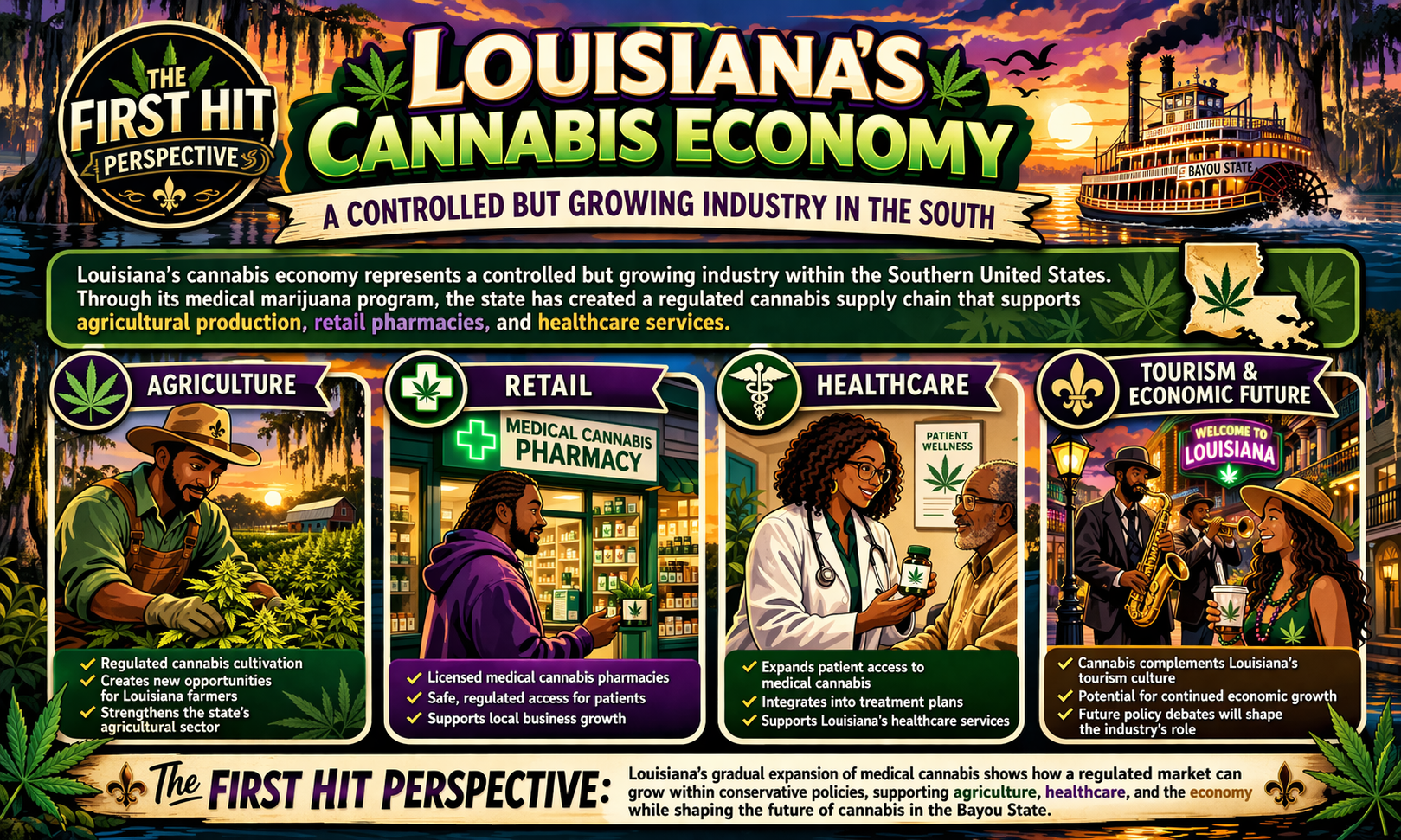
Louisiana’s cannabis economy is one of the more unique examples in the Southeastern United States. While recreational marijuana remains illegal, the state has developed a regulated medical cannabis market that has already begun creating economic activity across several industries. Unlike some states where cannabis industries developed quickly through recreational legalization, Louisiana has taken a more controlled approach. The state operates a tightly regulated medical marijuana system that includes licensed cultivators, processors, and medical cannabis pharmacies. Even within this limited framework, cannabis has begun contributing to the state’s agricultural sector, healthcare services, and small business economy. As the industry continues to grow, many observers are asking an important question: what economic opportunities could cannabis bring to Louisiana in the future?
Medical Cannabis Businesses
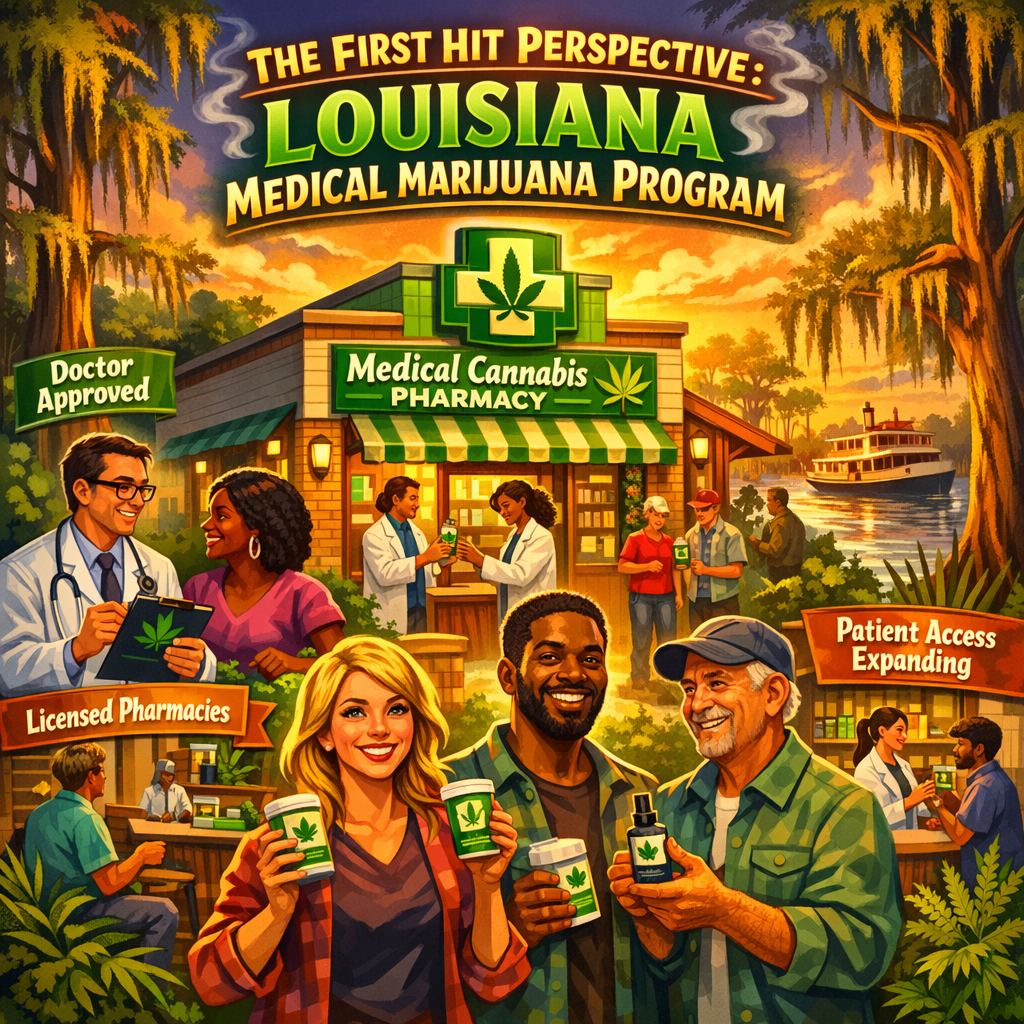
Louisiana’s cannabis economy currently revolves around its medical marijuana program, which allows patients with qualifying conditions to purchase cannabis products through licensed pharmacies.
The system includes several types of businesses:
cannabis cultivation operations
cannabis processing facilities
licensed medical marijuana pharmacies
laboratory testing services
These businesses create the foundation of Louisiana’s cannabis supply chain. Cultivators grow cannabis plants, processors manufacture cannabis products, laboratories ensure product safety, and pharmacies sell cannabis directly to registered patients. Because the industry is regulated by the state, each part of the supply chain must meet strict licensing and compliance requirements.
Agricultural Production
Agriculture plays a major role in Louisiana’s economy, and cannabis cultivation has begun to add another dimension to the state’s agricultural sector. Louisiana’s climate and agricultural expertise make the state well suited for plant cultivation. Cannabis production within the medical program currently takes place through licensed cultivation partnerships connected to Louisiana universities and regulated producers.
This controlled production model limits the number of growers but still creates agricultural jobs related to:
plant cultivation
greenhouse operations
agricultural research
cannabis processing and manufacturing
As the medical market grows, cannabis cultivation could continue expanding as a specialized agricultural sector within Louisiana.
Retail Through Medical Cannabis Pharmacies
Instead of traditional dispensaries, Louisiana allows medical cannabis products to be sold through state-licensed medical marijuana pharmacies.
These pharmacies operate similarly to dispensaries in other states but follow Louisiana’s unique regulatory framework.
Across Louisiana, medical cannabis pharmacies now operate in cities such as:
New Orleans
Baton Rouge
Lafayette
Shreveport
Lake Charles
These businesses provide jobs in retail, healthcare consultation, management, and security services.
For patients, these pharmacies offer access to regulated cannabis products that have been tested for safety and potency.
Tourism and Cannabis Conversations
Tourism is one of Louisiana’s largest economic drivers, particularly in cities like New Orleans, which attracts millions of visitors every year for culture, music, food, and festivals.
While Louisiana does not currently allow recreational cannabis tourism, the presence of a growing medical cannabis industry has sparked conversations about whether cannabis-related tourism could one day intersect with the state’s travel economy.
In states where cannabis is legal, tourism industries sometimes include:
cannabis-friendly events
dispensary tourism
wellness retreats and cannabis experiences
Louisiana has not moved in this direction yet, but as cannabis policy evolves across the United States, some observers believe tourism-focused states could eventually explore cannabis-related experiences within their travel industries.
Hemp and CBD Businesses
Louisiana also participates in the broader hemp and CBD market created by the 2018 Federal Farm Bill.
Hemp-derived products such as:
CBD oils
hemp beverages
wellness products
hemp-derived cannabinoid products
are sold in retail stores throughout the state.
These businesses operate outside the medical cannabis program but still contribute to the broader cannabis-related economy by introducing consumers to cannabinoid products.
For many entrepreneurs, hemp retail has become an entry point into the cannabis marketplace.
The First Hit Perspective
Louisiana’s cannabis economy represents a controlled but growing industry within the Southern United States. Through its medical marijuana program, the state has created a regulated cannabis supply chain that supports agricultural production, retail pharmacies, and healthcare services. Although the industry remains smaller than markets in fully legalized states, Louisiana’s gradual expansion of medical cannabis demonstrates how cannabis economies can develop even within conservative policy environments. With agriculture, tourism, and healthcare all playing major roles in Louisiana’s economy, the future of cannabis in the Bayou State will likely continue evolving as lawmakers, businesses, and communities debate the role cannabis could play in the state’s economic future.