Why Florida Still Hasn’t Fully Legalized Recreational Marijuana: Politics, Power, and the Debate Over Cannabis
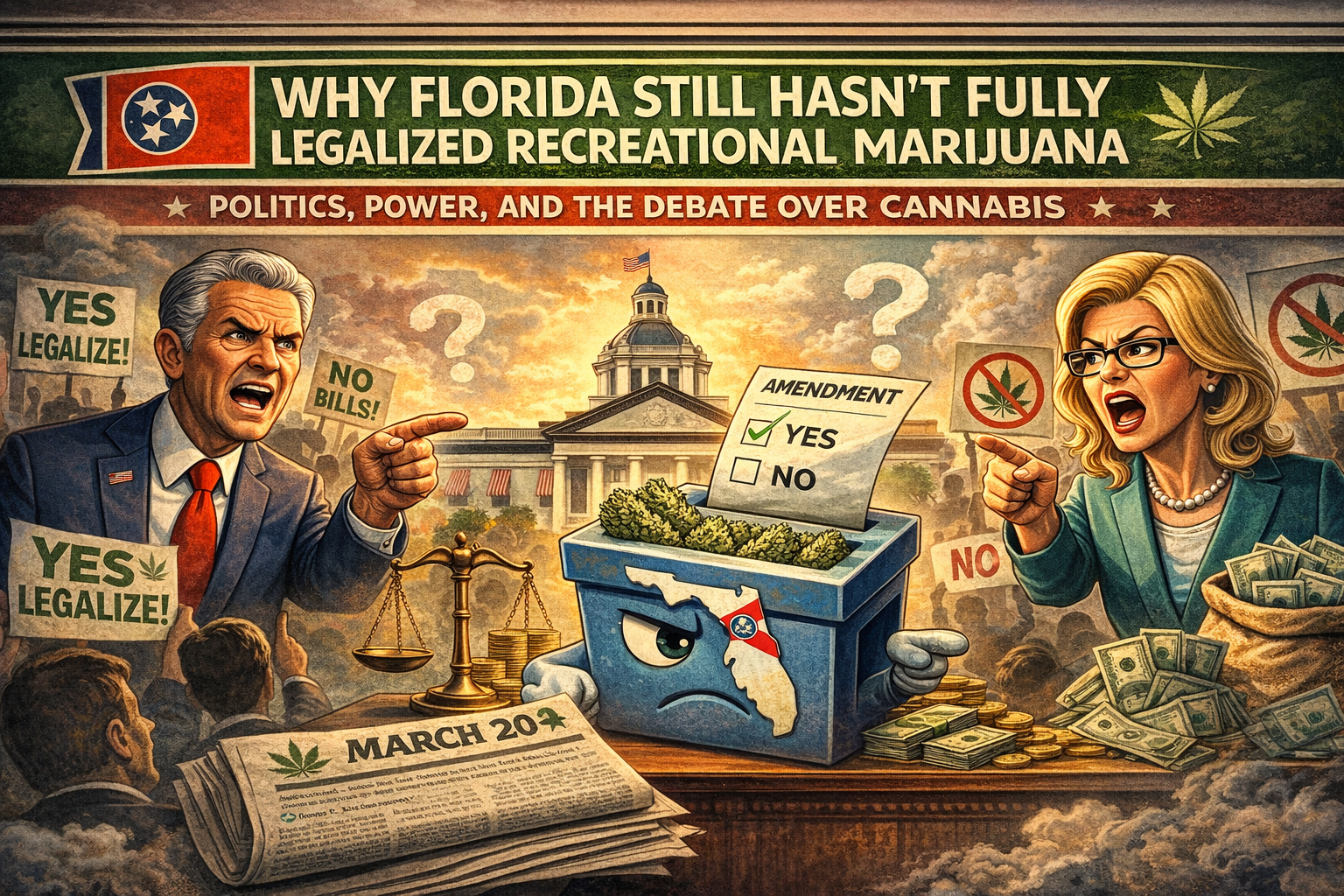
Florida has one of the largest medical marijuana industries in the United States, serving hundreds of thousands of registered patients and generating billions of dollars in revenue each year. Dispensaries operate across major cities from Miami and Tampa to Orlando and Jacksonville, and cannabis has become a normal part of the healthcare conversation for many residents. Yet despite this massive medical market, recreational marijuana remains illegal in Florida. That reality has left many people asking the same question: if the industry is already thriving and public support continues to grow, why hasn’t Florida taken the final step toward full legalization? The answer lies in a mix of state politics, regulatory structure, economic interests, and the unique way Florida laws are changed.
Florida’s Political Structure Makes Legalization Complicated
Unlike some states where legislatures have passed legalization laws directly, Florida operates under a system where major cannabis policy changes often come through constitutional amendments voted on by the public. Florida lawmakers have historically been cautious about expanding cannabis laws beyond the medical system. While the legislature has allowed the medical program to grow, many state leaders remain hesitant about full recreational legalization. Because of that political climate, legalization efforts in Florida have largely focused on ballot initiatives, where voters can decide the issue directly. However, Florida has one of the highest thresholds in the country for passing constitutional amendments. Any proposed measure must receive at least 60 percent of the statewide vote to become law. That requirement makes legalization campaigns significantly harder to win compared to states that only require a simple majority.
The Medical Cannabis Industry Already Has Major Influence
Another factor shaping the legalization debate is the size of Florida’s existing medical cannabis industry. Large licensed companies already operate vertically integrated cannabis businesses across the state, meaning they control cultivation, processing, distribution, and retail sales under a tightly regulated system. These companies have invested heavily in Florida’s medical market and hold valuable licenses that limit competition. Some industry observers believe that this structure influences how legalization discussions unfold. Expanding cannabis laws could create new opportunities, but it could also reshape the existing market and introduce new competitors. Because of that, the conversation around legalization often includes questions about who benefits from the system that already exists and how a recreational market would be structured.
Public Opinion Continues to Shift
While political leadership has moved cautiously, public opinion in Florida has shifted dramatically over the past decade. Polling consistently shows that a majority of Florida voters support legalizing recreational marijuana for adults. Younger voters, in particular, have shown strong support for broader cannabis reform. The success of the medical marijuana amendment in 2016 also demonstrated that voters are willing to support cannabis policy changes when they appear on the ballot. Still, the 60 percent approval requirement means that legalization campaigns must build broad bipartisan support across the state, not just narrow majorities in urban areas.
The Economic Argument for Legalization
Supporters of legalization frequently point to the potential economic impact. Florida has a population of more than 22 million residents and receives tens of millions of tourists each year. Because of that, analysts believe the state could become one of the largest recreational cannabis markets in North America if legalization were approved.
Potential benefits often discussed include:
• billions in new tax revenue
• thousands of new jobs in agriculture and retail
• expanded tourism opportunities
• reduced criminal penalties for cannabis possession
Opponents, however, continue raising concerns about impaired driving, youth access to cannabis, and broader public health effects. These debates continue shaping how lawmakers, voters, and advocacy groups approach the issue.
Why the Debate Isn’t Over Yet
Even with strong public support and a booming medical cannabis industry, legalization in Florida remains an active political battle. Advocacy groups continue working to place legalization proposals on the statewide ballot, while policymakers debate how the cannabis market should evolve in the future. Florida’s unique political structure means that voters themselves may ultimately decide whether recreational marijuana becomes legal, rather than the legislature alone. Until that moment arrives, Florida will likely remain what it is today: a medical marijuana powerhouse that is still deciding whether it wants to take the final step toward full legalization.
The First Hit Perspective
Florida sits at a crossroads in the Southern cannabis conversation. The state already has one of the largest medical cannabis systems in the country, dispensaries are visible across major cities, and public support for reform continues to grow. At the same time, political caution and regulatory complexity keep full legalization just out of reach. For the rest of the South, Florida is more than just another state debating cannabis policy. It is a preview of how legalization discussions may unfold across the region. At First Hit, our goal is to make sure people understand how these conversations actually work — the laws, the politics, the business interests, and the public opinion shaping the future of cannabis in the South.
Because when people understand the system, they can better understand where the movement might go next.